
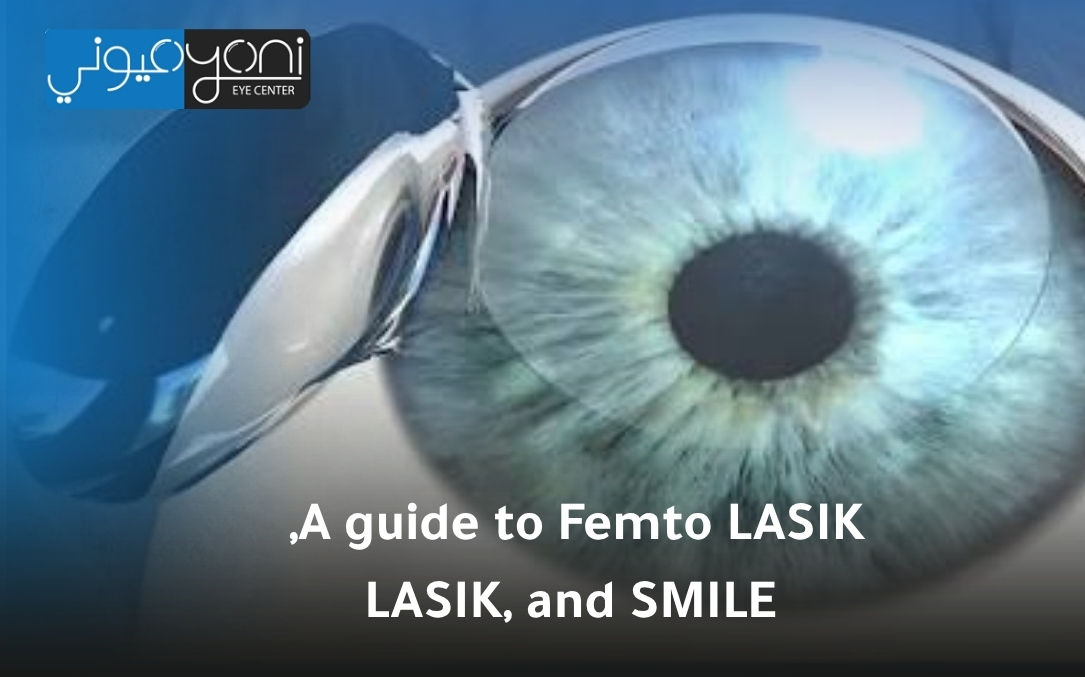
Laser vision correction has become an important option for people who want to reduce their dependence on glasses or contact lenses. Modern refractive surgery offers several techniques, but choosing between them requires more than comparing the names of the procedures.
Patients researching Femto LASIK LASIK and SMILE often find similar descriptions online, even though each procedure uses a different surgical approach. The main differences involve the way the cornea is accessed, the laser technology used, the amount and type of corneal tissue treated, and the suitability of each technique for different eyes.
A procedure that works very well for one patient may not be the right choice for another. Corneal thickness, corneal shape, refractive error, dry-eye symptoms, age, general eye health, and visual expectations all need to be considered before surgery.
This guide explains Femto LASIK LASIK and SMILE in simple terms, including how each procedure works, the differences between them, their potential advantages and limitations, the examinations required before surgery, and the factors that help an ophthalmologist determine the most suitable option.
What Is Femto LASIK?
Femto LASIK is an advanced LASIK technique that uses a femtosecond laser to create the corneal flap. Traditional LASIK may use a mechanical microkeratome for flap creation, while Femto LASIK replaces this step with laser technology.
The purpose of the procedure remains similar to conventional LASIK. The surgeon creates access to the corneal tissue, reshapes the cornea with an excimer laser according to the patient’s prescription, and then returns the flap to its original position.
The term “Femto” refers specifically to the femtosecond laser used during flap creation. This laser produces extremely short pulses and allows the surgeon to plan important flap parameters with a high degree of control.
How Does Femto LASIK Work?
The procedure starts with a detailed examination of the eyes. The surgeon needs accurate information about the cornea, refractive error, tear film, and overall eye health before determining whether laser correction is appropriate.
During surgery, the femtosecond laser creates a thin corneal flap according to the treatment plan. The surgeon then lifts the flap and uses an excimer laser to remove microscopic amounts of corneal tissue.
The reshaping process changes the curvature of the cornea so that light can focus more accurately on the retina. After completing the laser correction, the surgeon repositions the flap over the treated area.
The flap naturally adheres to the underlying cornea, so conventional stitches are generally not required.
What Is Traditional LASIK?
LASIK is one of the established laser vision correction procedures used to correct certain refractive errors. The procedure involves creating a corneal flap, lifting it, reshaping the underlying corneal tissue with an excimer laser, and then repositioning the flap.
Traditional LASIK and Femto LASIK share the same general treatment concept. The major distinction lies in the technology used to create the flap.
Traditional LASIK may involve a mechanical microkeratome, while Femto LASIK uses a femtosecond laser. Both approaches use laser technology during the corneal reshaping stage.
Understanding this distinction is important because patients sometimes assume that traditional LASIK does not involve lasers. The difference actually concerns the flap-creation step rather than whether a laser is used during the entire procedure.
What Is SMILE?
SMILE, which stands for Small Incision Lenticule Extraction, follows a different approach from LASIK-based procedures.
The surgeon uses a femtosecond laser to create a small lens-shaped piece of corneal tissue called a lenticule. A small incision is then created through which the surgeon removes the lenticule.
Unlike LASIK, SMILE does not require the creation of a conventional corneal flap. Removing the lenticule changes the shape of the cornea and corrects the targeted refractive error.
This flapless approach has made SMILE an important option in modern refractive surgery for appropriately selected patients.
Femto LASIK LASIK and SMILE: What Is the Main Difference?
The most important distinction between the three techniques is the way the surgeon accesses and changes the corneal tissue.
LASIK and Femto LASIK both involve a corneal flap. The difference is that traditional LASIK may use a mechanical device to create the flap, while Femto LASIK uses a femtosecond laser.
SMILE does not create a conventional flap. Instead, the femtosecond laser creates a lenticule inside the cornea, which the surgeon removes through a small incision.
Basic comparison
| Feature | Traditional LASIK | Femto LASIK | SMILE |
| Corneal flap | Yes | Yes | No conventional flap |
| Femtosecond laser | Not necessarily | Used for flap creation | Used to create lenticule and incision |
| Excimer laser | Used | Used | Not required |
| Main tissue approach | Flap + corneal reshaping | Flap + corneal reshaping | Lenticule removal |
| Incision | Flap interface | Flap interface | Small incision |
| Visual recovery | Usually rapid | Usually rapid | Usually rapid, with individual variation |
| Suitability | Depends on eye characteristics | Depends on eye characteristics | Depends on eye characteristics |
No technique should automatically be considered the best for every patient. The appropriate choice depends on the measurements and health of the individual eye.
What Is the Difference Between LASIK and Femto LASIK?
The difference between LASIK and Femto LASIK mainly concerns the method used to create the corneal flap.
Traditional LASIK may use a mechanical microkeratome. Femto LASIK uses a femtosecond laser for this stage.
Both procedures then use an excimer laser to reshape the cornea according to the patient’s refractive error.
Traditional LASIK generally involves:
- Creating a corneal flap with a mechanical microkeratome.
- Lifting the flap.
- Reshaping the corneal tissue with an excimer laser.
- Repositioning the flap.
Femto LASIK generally involves:
- Creating the flap with a femtosecond laser.
- Lifting the flap.
- Reshaping the cornea with an excimer laser.
- Repositioning the flap.
The key point is that the two techniques have a similar overall surgical concept, while the technology used to create the flap differs.
Femto LASIK LASIK and SMILE: How Do They Compare?
Patients often compare these procedures because they have the same broad objective: correcting refractive errors and reducing dependence on glasses or contact lenses.
The surgical pathway, however, differs significantly.
Femto LASIK uses a femtosecond laser to create the flap and an excimer laser to reshape the cornea. Traditional LASIK also uses a flap-based approach, but the flap may be created mechanically.
SMILE uses a femtosecond laser to create a lenticule inside the cornea and removes it through a small incision. No conventional LASIK flap is created.
These differences may affect the surgeon’s recommendation, the treatment range, postoperative experience, and suitability for a particular cornea.
Femto LASIK vs ReLEx SMILE: Which One Is Better?
The comparison between femto LASIK vs ReLEx SMILE is common among patients looking for modern alternatives to glasses and contact lenses.
Femto LASIK may be considered when the surgeon wants to perform customized corneal reshaping using a flap-based approach. SMILE may be suitable for selected patients who are candidates for a flapless procedure.
Neither technique can be described as universally superior.
The surgeon needs to examine the cornea and determine whether the patient’s prescription falls within the appropriate treatment range. Other factors, including dry-eye status, corneal thickness, corneal shape, and lifestyle, also matter.
Factors that influence the choice
The ophthalmologist may consider:
- The exact refractive error.
- Degree of myopia.
- Degree and type of astigmatism.
- Corneal thickness.
- Corneal topography.
- Corneal tomography.
- Corneal shape and regularity.
- Tear-film condition.
- Existing dry-eye symptoms.
- Previous eye surgery.
- Overall eye health.
- Age.
- Occupational requirements.
- Lifestyle.
- Visual expectations.
The purpose of the examination is to find the procedure that provides an appropriate balance between safety, visual quality, predictability, and long-term corneal health.
Femto LASIK vs SMILE: Which Procedure Is Best?
The question which is best Femto LASIK or SMILE cannot be answered without examining the patient’s eyes.
A person with a particular corneal shape and refractive error may be a good candidate for Femto LASIK, while another person with different measurements may be better suited to SMILE.
Patients should therefore avoid choosing a procedure simply because it is newer, has a smaller incision, or is frequently promoted online.
The surgeon’s assessment should determine whether the cornea is suitable and which technique offers the most appropriate treatment for the individual patient.
Femto SMILE vs Femto LASIK: Why Does the Terminology Cause Confusion?
The phrase femto SMILE vs femto LASIK can sometimes be confusing because both procedures use a femtosecond laser.
The important difference is what the laser actually does.
In Femto LASIK, the femtosecond laser creates the corneal flap. An excimer laser subsequently reshapes the corneal tissue.
In SMILE, the femtosecond laser creates the lenticule inside the cornea and also creates the small incision used to remove it.
The two procedures therefore use similar laser technology at one stage but follow different surgical pathways.
The Difference Between Femto LASIK and SMILE
The difference between Femto LASIK and SMILE becomes easier to understand when the corneal tissue and incision are considered.
Femto LASIK requires a corneal flap. SMILE avoids a conventional flap and uses a small incision to remove the lenticule.
The smaller incision in SMILE may be an attractive feature for selected patients, but flapless surgery does not automatically mean that SMILE is suitable for every eye.
The cornea still needs adequate thickness, appropriate shape, and sufficient structural health for the planned treatment.
Flap versus small incision
A Femto LASIK flap remains attached to the cornea after the laser creates it. The surgeon lifts the flap during the treatment and places it back afterward.
SMILE uses a different concept. The surgeon removes the lenticule through the small incision without creating a traditional flap.
The decision between these approaches should follow the results of the preoperative assessment rather than the size of the incision alone.
How Is LASIK Different From SMILE?
LASIK and SMILE correct refractive errors through different surgical methods.
LASIK uses a flap to access the corneal tissue and then reshapes the cornea with an excimer laser.
SMILE removes a lenticule from within the cornea through a small incision.
LASIK has been widely used to treat myopia, hyperopia, and astigmatism within appropriate treatment ranges. SMILE is particularly established for myopia and myopic astigmatism within suitable treatment parameters.
The exact treatment range depends on the technology available, applicable approvals, and the patient’s individual measurements.
Ultra LASIK vs Femto LASIK
Patients may also encounter the comparison Ultra LASIK vs Femto LASIK while researching laser eye surgery.
The term “Ultra LASIK” does not necessarily refer to one standardized surgical technique worldwide. Different clinics may use the term to describe a specific laser platform, customized treatment protocol, or advanced LASIK package.
Femto LASIK has a more specific meaning because it refers to LASIK in which the femtosecond laser creates the corneal flap.
Patients should therefore ask the clinic what technology and treatment protocol the name represents rather than making a decision based only on a marketing term.
Questions to ask before treatment
Before scheduling surgery, ask the ophthalmologist:
- Which laser is used to create the corneal flap?
- Which laser performs the refractive correction?
- Is the treatment customized according to corneal mapping?
- Which refractive errors can the system treat?
- What examinations are performed before surgery?
- What are the inclusion and exclusion criteria?
- What follow-up is provided after surgery?
Clear answers to these questions help the patient understand the actual procedure rather than relying on the name used to promote it.
What Happens During Femto LASIK?
Femto LASIK is generally performed as an outpatient procedure. The eye is numbed with topical anesthetic drops, so general anesthesia is usually unnecessary.
The surgeon follows the treatment plan created after the preoperative examination.
Step 1: Preparing the eye
The eye is cleaned and anesthetic drops are applied. The patient remains awake during the procedure.
Step 2: Creating the corneal flap
The femtosecond laser creates a thin corneal flap according to the dimensions selected by the surgeon.
Step 3: Reshaping the cornea
The surgeon lifts the flap and uses an excimer laser to reshape the corneal tissue according to the patient’s refractive error.
Step 4: Repositioning the flap
The flap is placed back over the treated area. Conventional sutures are generally not required.
The cornea then begins its healing process, and the patient receives specific postoperative instructions to protect the eye.
How Does SMILE Work?
SMILE begins with detailed planning and corneal measurements.
The femtosecond laser creates a lens-shaped section of tissue inside the cornea. The surgeon then creates a small access incision and removes the lenticule through that opening.
Removing the lenticule changes the corneal curvature and corrects the targeted refractive error.
Why Is SMILE Considered Flapless?
SMILE does not require the conventional corneal flap used in LASIK procedures.
The surgeon instead accesses the previously created lenticule through a small incision. This difference is one of the defining characteristics of SMILE.
Patients should still understand that flapless surgery requires careful patient selection and appropriate corneal anatomy.
Who May Be a Candidate for Femto LASIK?
Not everyone who wears glasses or contact lenses is automatically eligible for laser vision correction.
The ophthalmologist needs to evaluate the health and structure of the cornea before recommending Femto LASIK.
A suitable candidate generally needs stable refractive measurements, adequate corneal tissue, and no significant condition that could increase the risk of complications.
What Can Prevent or Delay Femto LASIK?
Potential reasons for avoiding or postponing the procedure can include:
- An unstable glasses prescription.
- Significant corneal irregularity.
- Keratoconus or suspected keratoconus.
- Insufficient corneal thickness.
- Certain corneal diseases.
- Severe or uncontrolled dry eye.
- Active eye infection.
- Active inflammation.
- Certain systemic medical conditions.
- Some medications.
- Pregnancy-related changes.
The final decision requires a comprehensive ophthalmic examination rather than a decision based on the glasses prescription alone.
Who May Be a Candidate for SMILE?
SMILE also requires careful patient selection.
The surgeon evaluates the corneal thickness and shape, refractive error, ocular surface condition, and general eye health before recommending treatment.
A patient who is unsuitable for Femto LASIK is not necessarily a candidate for SMILE. Both procedures require appropriate corneal anatomy and sufficient tissue.
Patients should therefore avoid selecting SMILE solely because it does not create a conventional flap.
What Tests Are Needed Before Laser Vision Correction?
Preoperative testing is one of the most important stages of refractive surgery.
A standard glasses prescription cannot provide all the information needed to determine whether laser surgery is safe. The surgeon also needs to understand the structure of the cornea and the condition of the ocular surface.
Common examinations include:
- Refraction.
- Visual acuity testing.
- Corneal topography.
- Corneal tomography.
- Pachymetry to measure corneal thickness.
- Tear-film evaluation.
- Slit-lamp examination.
- Eye pressure measurement.
- Retinal examination.
- Pupil assessment when clinically indicated.
These examinations can identify corneal abnormalities and other factors that may influence the choice of procedure.
Does Femto LASIK Hurt?
Most patients do not experience significant pain during Femto LASIK because topical anesthetic drops numb the eye.
Some patients may notice pressure, touch, or temporary changes in vision during different parts of the procedure.
After surgery, mild irritation, watering, light sensitivity, or a gritty sensation may occur. These symptoms vary between patients and generally improve as healing progresses.
Severe pain, worsening vision, marked redness, or other concerning symptoms after surgery should not be ignored. The patient should contact the treating ophthalmologist if such symptoms occur.
Is SMILE Painful?
SMILE is also performed using topical anesthesia, so significant pain during the procedure is not generally expected.
Temporary irritation, watering, light sensitivity, or discomfort can occur during recovery. The intensity and duration vary according to the individual patient.
The surgeon provides postoperative medications and instructions according to the patient’s condition.
How Fast Is Vision Recovery After Femto LASIK?
One reason LASIK remains popular is its generally rapid visual recovery.
Many patients notice a substantial improvement in vision soon after surgery. Some temporary fluctuations can occur during the first days or weeks.
The final stabilization period varies according to the patient’s prescription, healing response, ocular surface condition, and other individual factors.
Patients should therefore avoid judging the final result immediately after surgery.
How Fast Is Vision Recovery After SMILE?
SMILE can also provide relatively rapid recovery of useful vision, although the exact timeline differs from one patient to another.
Some patients notice clear vision very quickly, while others experience gradual improvement over several days or longer.
Temporary fluctuations, dryness, or mild visual disturbances may occur during the healing period.
Following the postoperative instructions is important for supporting an uncomplicated recovery.
Can Laser Eye Surgery Cause Dry Eye?
Dry eye is an important consideration after corneal refractive surgery.
LASIK can temporarily affect corneal nerves and the tear film, which may contribute to dry-eye symptoms during recovery. SMILE also affects corneal nerves, although the pattern and severity of symptoms can differ.
Patients who already experience significant dry eye should have the condition evaluated before undergoing surgery.
Symptoms of dry eye may include:
- Burning.
- A gritty sensation.
- Fluctuating vision.
- Redness.
- Excessive watering.
- Light sensitivity.
- Discomfort when reading.
- Discomfort during prolonged screen use.
These symptoms do not automatically mean that laser surgery is impossible, but they make proper preoperative evaluation especially important.
Can LASIK or SMILE Correct Astigmatism?
Laser refractive procedures can correct certain forms of astigmatism when the patient’s prescription and corneal measurements meet the treatment criteria.
Femto LASIK has been used to correct myopia, hyperopia, and astigmatism within approved treatment ranges.
SMILE is also used for myopia and myopic astigmatism within appropriate treatment parameters.
The surgeon determines whether the specific type and degree of astigmatism can be treated safely after reviewing the prescription and corneal measurements.
Can Laser Surgery Eliminate the Need for Glasses?
The main goal of refractive surgery is to reduce dependence on glasses or contact lenses.
The procedures do not guarantee that a patient will never need glasses again. Some people may still require glasses for specific activities, while age-related changes can create new visual needs later in life.
Presbyopia is a natural age-related change that reduces the eye’s ability to focus on near objects. Correcting distance vision with laser surgery does not stop presbyopia from developing.
Patients approaching or beyond their forties should discuss this issue with their ophthalmologist before deciding on surgery.
What Are the Possible Risks of Femto LASIK and SMILE?
Every surgical procedure carries potential risks, even when modern technology is used and the patient is carefully selected.
Possible postoperative visual symptoms include:
- Dry eye.
- Glare.
- Halos.
- Fluctuating vision.
- Difficulty seeing in certain lighting conditions.
Most appropriately selected patients recover well, but individual outcomes vary.
Less common complications may include infection, corneal complications, undercorrection, overcorrection, regression, or other problems that can affect visual quality.
The individual risk profile depends on the patient’s anatomy, refractive error, corneal condition, procedure selected, and surgical assessment.
How Do You Choose Between Femto LASIK and SMILE?
The decision should begin with the patient’s eyes rather than with the name of the procedure.
A surgeon may recommend Femto LASIK when the patient’s corneal anatomy and refractive needs make a flap-based procedure appropriate. Another patient may be a better candidate for SMILE because a flapless approach is suitable and the prescription falls within the appropriate treatment range.
Questions to discuss with your ophthalmologist
Ask your doctor:
- Is my cornea healthy enough for laser vision correction?
- Is my corneal thickness adequate?
- Do I have any signs of keratoconus?
- Which procedure is suitable for my prescription?
- Do I have dry eye?
- What visual result can I realistically expect?
- What risks are specific to my eyes?
- How long should recovery take?
- Will I likely need glasses again in the future?
- What happens if the correction is incomplete?
A detailed consultation allows the patient to understand the expected benefits and limitations before making a decision.
Why Does Choosing an Experienced Refractive Surgeon Matter?
Laser technology is an important part of refractive surgery, but the laser platform is only one element of the treatment.
The surgeon needs to interpret corneal measurements, identify risk factors, determine whether the patient is an appropriate candidate, select the suitable procedure, customize the treatment plan, and monitor recovery.
Dr. Tarek Abdelsamee is a Consultant Ophthalmologist specializing in Cornea, Refractive Surgery, and Cataract Surgery. His professional qualifications include a Fellowship of the Royal College of Surgeons of Glasgow and a fellowship at the Bascom Palmer Eye Institute in Florida. He also previously served as Head of the Cornea and Refractive Surgery Department at Magrabi Eye Hospital in Makkah, Saudi Arabia.
His specialized experience in corneal disease and refractive surgery is particularly valuable when a patient needs an individualized assessment before selecting a laser vision correction procedure.
A thorough evaluation can determine whether Femto LASIK, SMILE, another refractive procedure, or continuing with glasses is the most appropriate option.
Why Is Preoperative Corneal Assessment So Important?
Laser refractive surgery changes the shape of the cornea permanently. The surgeon therefore needs to determine whether the cornea can safely tolerate the planned treatment.
Corneal topography and tomography can reveal irregularities that may not be apparent from a routine glasses prescription.
This assessment becomes particularly important for patients with a family history of keratoconus, previous eye problems, unusually high prescriptions, or suspicious corneal measurements.
A seemingly ordinary prescription does not automatically mean that the cornea is suitable for laser surgery.
Can Someone Have LASIK After Previous Eye Surgery?
Previous eye surgery does not automatically rule out refractive surgery, but it can affect the decision significantly.
Patients should tell their ophthalmologist about previous procedures, including cataract surgery, corneal surgery, previous laser correction, and other eye operations.
Additional testing may be necessary before the surgeon determines whether another procedure can be performed safely.
Can Femto LASIK or SMILE Be Performed on Both Eyes?
Laser vision correction is commonly performed on both eyes, either during the same visit or according to the surgeon’s preferred protocol.
The decision depends on the patient’s eye health, treatment plan, and the clinical protocol followed by the ophthalmologist.
Patients should follow the specific instructions provided by their surgeon rather than assuming that both eyes will always be treated according to the same schedule.
How Should You Prepare for a Laser Vision Correction Consultation?
Bring previous eye examinations and glasses prescriptions when available. Patients who wear contact lenses may need to stop wearing them for a certain period before some measurements because contact lenses can temporarily affect corneal shape.
The required period depends on the type of contact lenses and the clinic’s protocol.
Tell the ophthalmologist about previous eye conditions, surgeries, medications, and relevant medical conditions. Complete information helps the surgeon interpret the examination results more accurately.
Conclusion
Femto LASIK LASIK and SMILE are different approaches to refractive surgery that share a common goal: correcting suitable refractive errors and reducing dependence on glasses or contact lenses.
Femto LASIK uses a femtosecond laser to create a corneal flap and an excimer laser to reshape the cornea. Traditional LASIK also uses a flap-based approach, while SMILE uses a femtosecond laser to create and remove a corneal lenticule through a small incision without creating a conventional LASIK flap.
The difference between Femto LASIK and SMILE is therefore not simply a question of which technology is newer. Each technique has its own surgical approach, treatment parameters, advantages, limitations, and patient-selection requirements.
Patients should not choose their procedure based only on online comparisons such as femto LASIK vs ReLEx SMILE or femto LASIK vs SMILE. A comprehensive eye examination remains the essential first step because corneal thickness, corneal shape, refractive error, dry-eye status, and overall eye health can completely change the treatment recommendation.
Choose the Right Procedure for Your Eyes
If you are considering laser vision correction, the first step should be a detailed examination rather than choosing a procedure based on its name.
Dr. Tarek Abdelsamee specializes in corneal surgery, refractive surgery, and cataract surgery, with international training and professional experience in these fields. A personalized assessment can help determine whether Femto LASIK LASIK and SMILE are appropriate options for your eyes and which approach may best match your visual needs.
Book your consultation today and take the first step toward reducing your dependence on glasses or contact lenses with a treatment plan designed around your eyes with Dr. Tarek Abdelsamee – Oyoni Eye Center.
Frequently Asked Questions
What is Femto LASIK?
Femto LASIK LASIK and SMILE are all refractive surgery options, but Femto LASIK specifically refers to a LASIK procedure in which a femtosecond laser creates the corneal flap. An excimer laser then reshapes the cornea to correct the refractive error.
What is the difference between LASIK and Femto LASIK?
The main difference concerns flap creation. Traditional LASIK may use a mechanical microkeratome, while Femto LASIK uses a femtosecond laser to create the flap. Both procedures use an excimer laser for corneal reshaping.
What is the difference between Femto LASIK and SMILE?
Femto LASIK creates a corneal flap and then uses an excimer laser to reshape the cornea. SMILE does not create a conventional flap and instead removes a corneal lenticule through a small incision using a femtosecond laser.
Which is best, Femto LASIK or SMILE?
There is no universally best procedure. The appropriate choice depends on corneal thickness, corneal shape, refractive error, ocular surface health, lifestyle, and other individual factors.
Is Femto LASIK better than traditional LASIK?
Femto LASIK allows the surgeon to create the corneal flap using a femtosecond laser with control over important flap parameters. Whether it is the better option depends on the individual patient’s eyes and the surgeon’s treatment plan.
Is SMILE safer than Femto LASIK?
Both procedures have established safety profiles when performed on appropriately selected patients. The more relevant question is which procedure is safest and most suitable for the specific patient’s eyes.


